Back to the Ocean 2026

Rescued from the coasts of the English Channel and the Atlantic between September 2025 and May 2026, and taken to the Centre for the Study and Care of Sea Turtles (CESTM) at the Aquarium La Rochelle for treatment, 33 loggerhead turtles (Caretta caretta) were released back into the ocean on 3 July 2026.

The CESTM’s 400th milestone

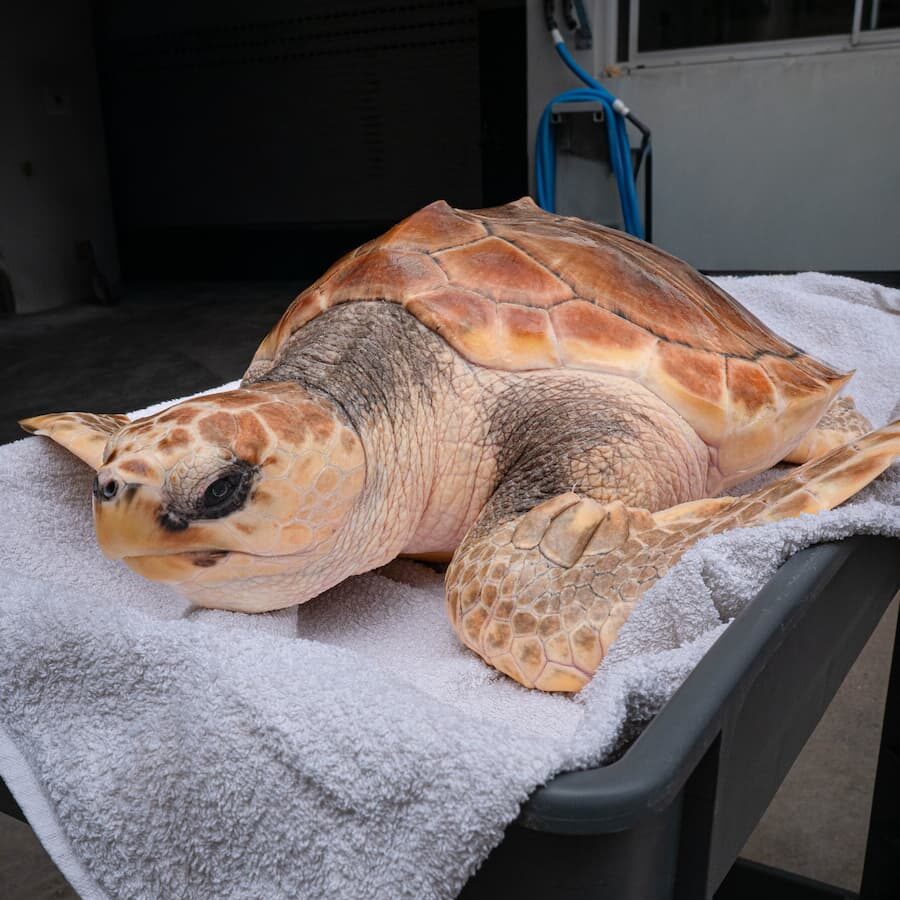
Like the Aquarium, which is celebrating its 25th anniversary in 2026, the CESTM was also set to reach a symbolic milestone with the release back into the ocean of the 400th sea turtle cared for by the Centre. This loggerhead turtle (Caretta caretta), named ‘Rochelle’ by users on the Aquarium’s social media platforms, had been found adrift near Saint-Jean-de-Luz (64) on 30 September 2025 by a fisherman.

Quickly taken into care by a member of the East Atlantic Sea Turtle Network (RTMAE), which is coordinated by the CESTM, it was transferred to La Rochelle as a matter of urgency. On arrival at the Aquarium, the animal was malnourished, dehydrated and suffering from numerous deficiencies.
The result of day-to-day work

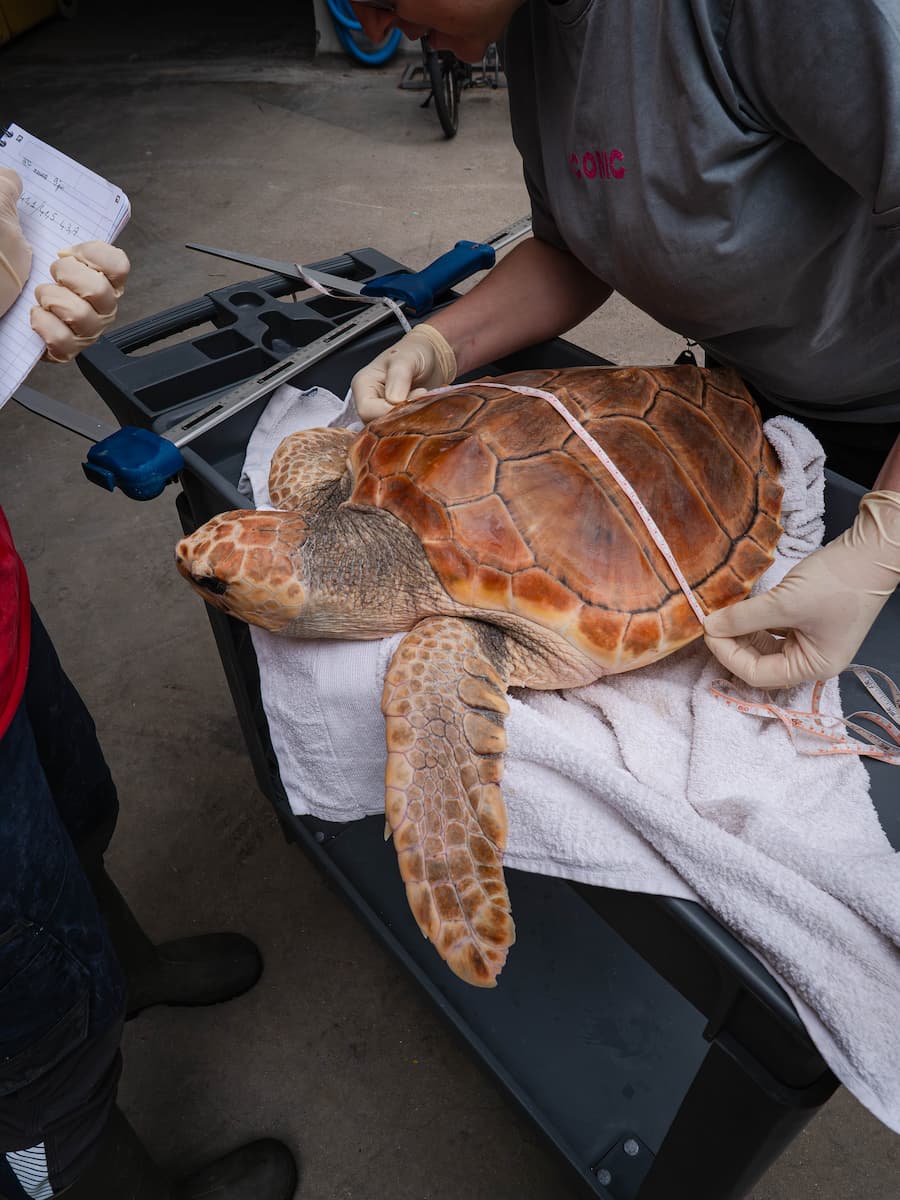
Each individual receives an average of four to six months of care: examinations, treatments, a specialised diet… all of which require constant attention. During this period, each turtle follows a personalised care plan, tailored to its specific conditions — such as lung infections, dehydration, malnutrition, fractures or blockages — as well as monitoring its changing state of health.

Their return to the ocean marks the culmination of the work carried out throughout the year by the CESTM to help conserve these marine species listed on the IUCN Red List. The species most frequently treated by the centre are the loggerhead turtle (Caretta caretta), classified as Vulnerable; the Kemp’s ridley turtle (Lepidochelys kempii), classified as Critically Endangered; and the green turtle (Chelonia mydas), classified as Least Concern.

Did you know?

Since January 2026, visitors have been able to explore the brand-new ‘A Glimpse Behind the Scenes’ area at the Aquarium. This new part of the tour highlights the day-to-day work of biologists, technicians and carers. It also showcases the work of the CESTM and follows the care journey of a sea turtle being treated by the Centre.

This fully interactive area invites you to step into the shoes of the teams and get involved in the various stages of the turtle’s care.

A name and a microchip for accurate tracking

At the CESTM, each turtle is assigned an identification number (e.g. Cc3837) and has a full identification record. This identification number always begins with the first two letters of the species’ scientific name. Thus, ‘Cc’ is used for the loggerhead turtle (Caretta caretta), ‘Cm’ for the green turtle (Chelonia mydas) and ‘Lk’ for Kemp’s ridley turtle (Lepidochelys kempii). The numbers that follow correspond to the order in which they were registered in the CESTM’s records.

In 2026, all the turtles that had been released back into the wild had one thing in common: their names began with the letter R. Far from being a mere coincidence, this choice means that, in the event of a new sighting during monitoring or a study, each individual can be immediately linked to the year of its return to the ocean.

Each individual is also fitted with a microchip — known as a ‘PIT tag’ — ensuring rapid identification in the event of a new sighting, wherever in the world it may occur. This microchip works in much the same way as those used for domestic animals, such as dogs and cats.

10 individuals with tracking tags

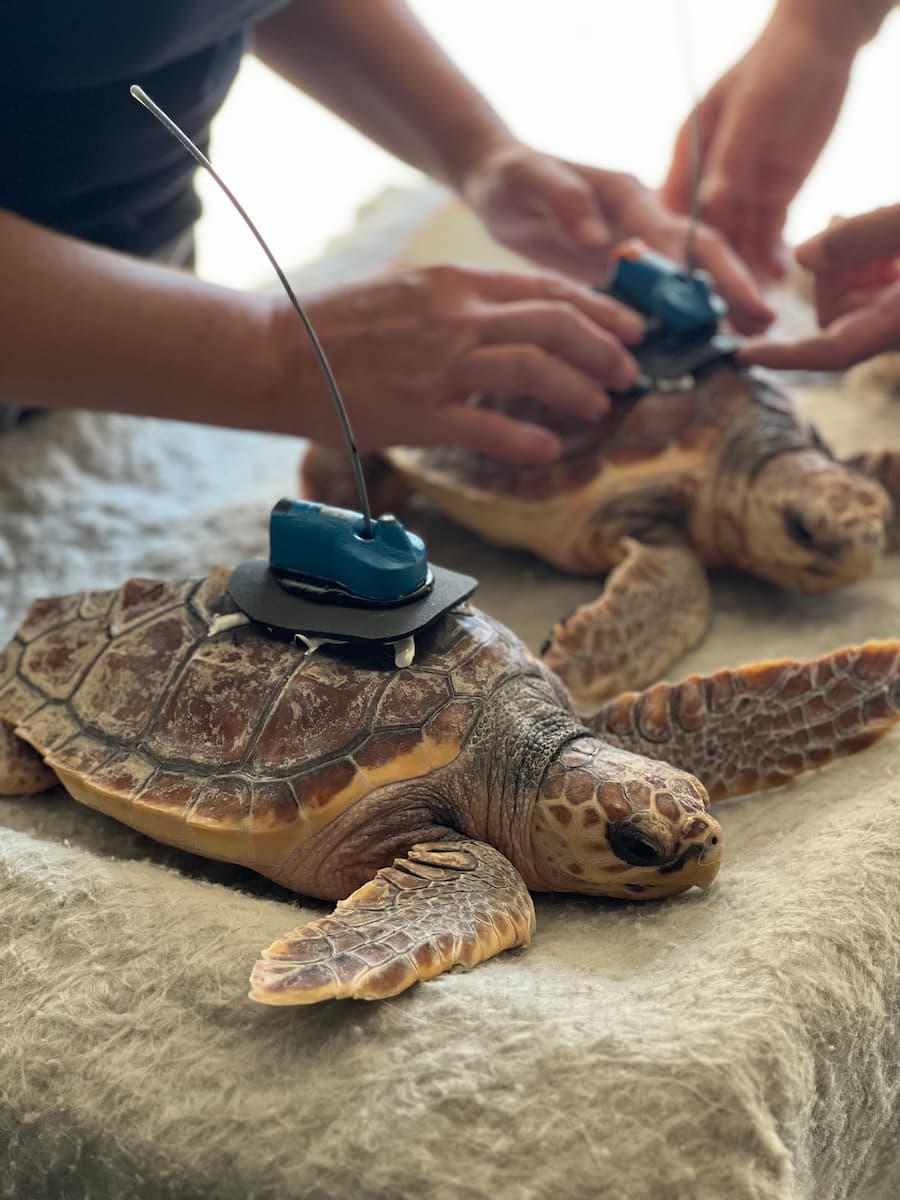
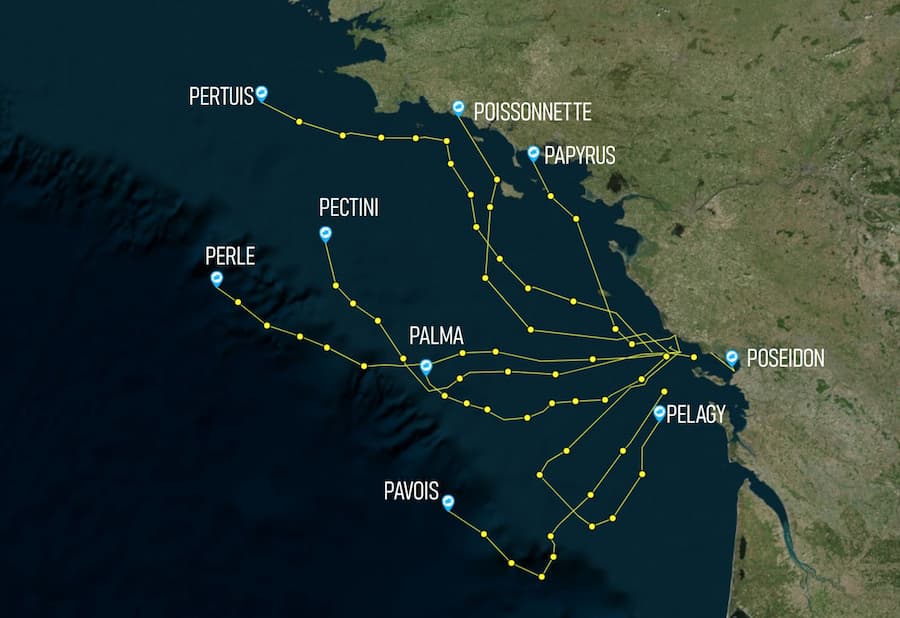
As part of this event, 10 turtles left the Aquarium La Rochelle fitted with an Argos tracking tag attached to their carapace, including ‘Rochelle’. Rochelle’s location over the coming months will be shared on the Aquarium’s social media channels and in this article, just below this section.

Of these 10 trackers, 2 are fitted with a depth sensor. These transmitters will record the position of the tracked turtles each time they surface to breathe and — for those fitted with a depth sensor — will also provide information on the depths reached during their dives.

All of this tracking will enable us to collect valuable data on the movements of these turtles, whether influenced by ocean currents or resulting from voluntary movements.

Follow the turtles’ journey

Focus on the ‘Lost Years’

Loggerhead turtles emerge onto the beaches of the Cape Verde archipelago and Florida before immediately returning to the ocean. The females will only return to their natal beach once they have reached sexual maturity, some 20 to 30 years later. In the meantime, these young turtles live unseen in the heart of the Atlantic. This little-known period of their lives has a name among scientists: the ‘lost years’.

This is precisely where the significance of the turtles taken in by the CESTM lies: they are juveniles that have washed up on our shores. Fitting them with tracking tags thus enables us to better understand this still largely unknown phase of their lives, which is characteristic of these young turtles and usually takes place far from any human observation.

“These data provide valuable insights into a life stage that is still largely unknown. They therefore help to improve our understanding, refine our 3D models and, ultimately, strengthen the protection of these species.”

_ Tony Candela, PhD, oceanographer and marine ecosystem modeller.

Research carried out over the years

Since 2008, the Aquarium  La Rochelle has carried out or set up 79 sea turtle monitoring programmes, including 73 on loggerhead turtles, 4 on Kemp’s ridley turtles and 2 on green turtles. Analysis of this extensive data set contributes directly to improving our understanding of these vulnerable species, particularly during their early life stages, and has yielded unprecedented findings in 2026.

Two scientific publications in 2026

In April 2026, the CESTM, represented by Florence Dell’Amico and Tony Candela, co-authored two major scientific articles, which are available to view and download on the Aquarium’s website. The first, published in Scientific Reports, reveals, using data from tracking tags, that young turtles dive deeper and deeper as they grow, thereby optimising their foraging. The second, published in *Movement Ecology*, presents the first habitat model for juvenile loggerhead turtles at an Atlantic-wide scale and confirms that European coasts are key areas during their seasonal migrations.

Tracking these 10 new turtles will help refine these models, which are essential for reducing the risk of bycatch. The aim is to gain a better understanding of the distribution of these young individuals in order to anticipate their presence and implement appropriate protective measures.

These scientific publications can be viewed and downloaded directly from the Aquarium’s website:

2026. Candela, T., Gaspar, P., Bailey, H. et al.

2026. Bartolini M., Hazen E.L., Parra H. et al.

Scientific publications of the CESTM

Le programme "signalez vos observations en mer"

Consulter

Biologie des tortues marines

Découvrir
For a better experience of our website, we invite you to increase the size of your navigator window.